
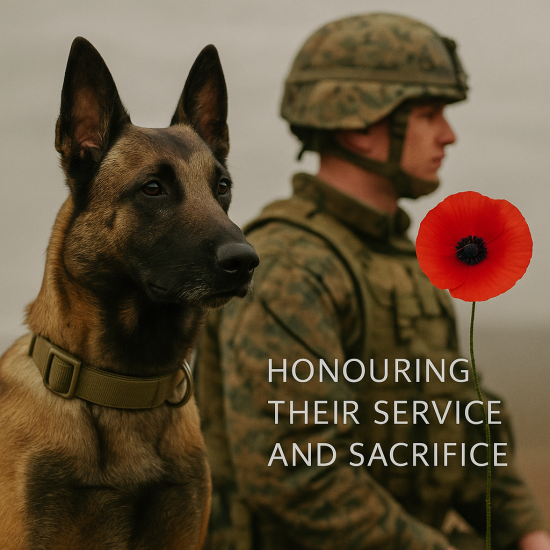
Honouring the Four-Legged Heroes: The Role of Dogs in Wartime
On Remembrance Day, we pause to honour the brave men and women who served — and the loyal dogs who stood beside them. While their names may not appear in history books, these four-legged heroes played vital roles on the battlefield, showing courage, intelligence, and devotion beyond measure.
🐕 Messenger Dogs
Before advanced communications, messenger dogs carried critical messages, maps, and even small supplies between units under fire.
Fast, focused, and fearless, they often navigated dangerous terrain that was too risky for human runners.
🩹 Medical and Rescue Dogs
Known as “mercy dogs,” these incredible animals searched battlefields for the wounded and dying, carrying small medical packs or leading medics to injured soldiers.
Many were trained to distinguish between the living and the fallen, saving countless lives.
🔍 Sentry and Scout Dogs
Dogs were used to guard camps and alert soldiers to approaching enemies.
With their sharp hearing and sense of smell, they could detect danger long before humans could — often preventing surprise attacks or ambushes.
💣 Mine and Explosives Detection Dogs
Specially trained dogs sniffed out landmines, bombs, and tripwires, protecting troops as they advanced. Their precision and bravery made them an essential part of military safety efforts.
❤️ Companionship and Morale
Beyond their duties, dogs brought comfort, hope, and emotional strength to soldiers living in harsh, frightening conditions.
A wagging tail or a moment of affection reminded troops of home — and gave them courage to face another day.
🌺 Lest We Forget
From World War I to today, dogs have served with honour, loyalty, and love, often risking — and giving — their lives to protect others.
This Remembrance Day, we remember them too — the silent heroes who asked for nothing but gave everything.